In 2007, a team of archaeologists working in a cave complex near the village of Areni in southern Armenia pulled the remains of a winemaking facility out of the floor. The vat held about sixty-five litres. The clay storage jars were arranged for fermentation. Biochemical analysis published in the Journal of Archaeological Science four years later confirmed wine residues. The facility dated to roughly 4100 BC. Armenia, by the time the lab work was done, could claim a continuous winemaking tradition stretching back more than six thousand years.
The continuity, however, almost broke. Through most of the twentieth century, Soviet planners reorganised Armenian agriculture toward brandy and bulk production. Vineyard plantings of native varieties collapsed. Growers stopped breeding. A great deal of the genetic and craft knowledge that had survived six millennia disappeared in seventy years.
What is happening across Vayots Dzor today is not a continuation. It is a reconstruction.
And as Mongabay's recent reporting on the revival makes clear, the work has been less about replanting than about rebuilding the institutional and scientific plumbing the industry needs to compound.
The lab that came before the wineries
The modern Armenian wine industry began with a freezer.
In 2012, a small group at the Institute of Molecular Biology of the National Academy of Sciences of Armenia opened the Laboratory of Plant Genomics, headed by Kristine Margaryan. The brief was simple, and slow. Collect grape samples from old vineyards, home gardens, and private collections. Sequence them. Archive the genetics of what Armenian viticulture used to be before any more of it disappeared.
The cumulative count is now more than 3,400 samples.
One Margaryan-led study, published in Frontiers in Plant Science, used twenty-five molecular markers across 492 of them and identified 221 distinct varieties. Of those, 66 were native cultivars that were either widely grown, neglected, or otherwise at risk. The diversity numbers were large enough that the group was folded into an international consortium analysing roughly six thousand wild and cultivated grape samples worldwide.
"Winemaking wasn't so popular in Armenia when we began this process."
The lab archived the genetics first. The vineyards came afterwards, on the back of it.
Climbing higher as the climate warms
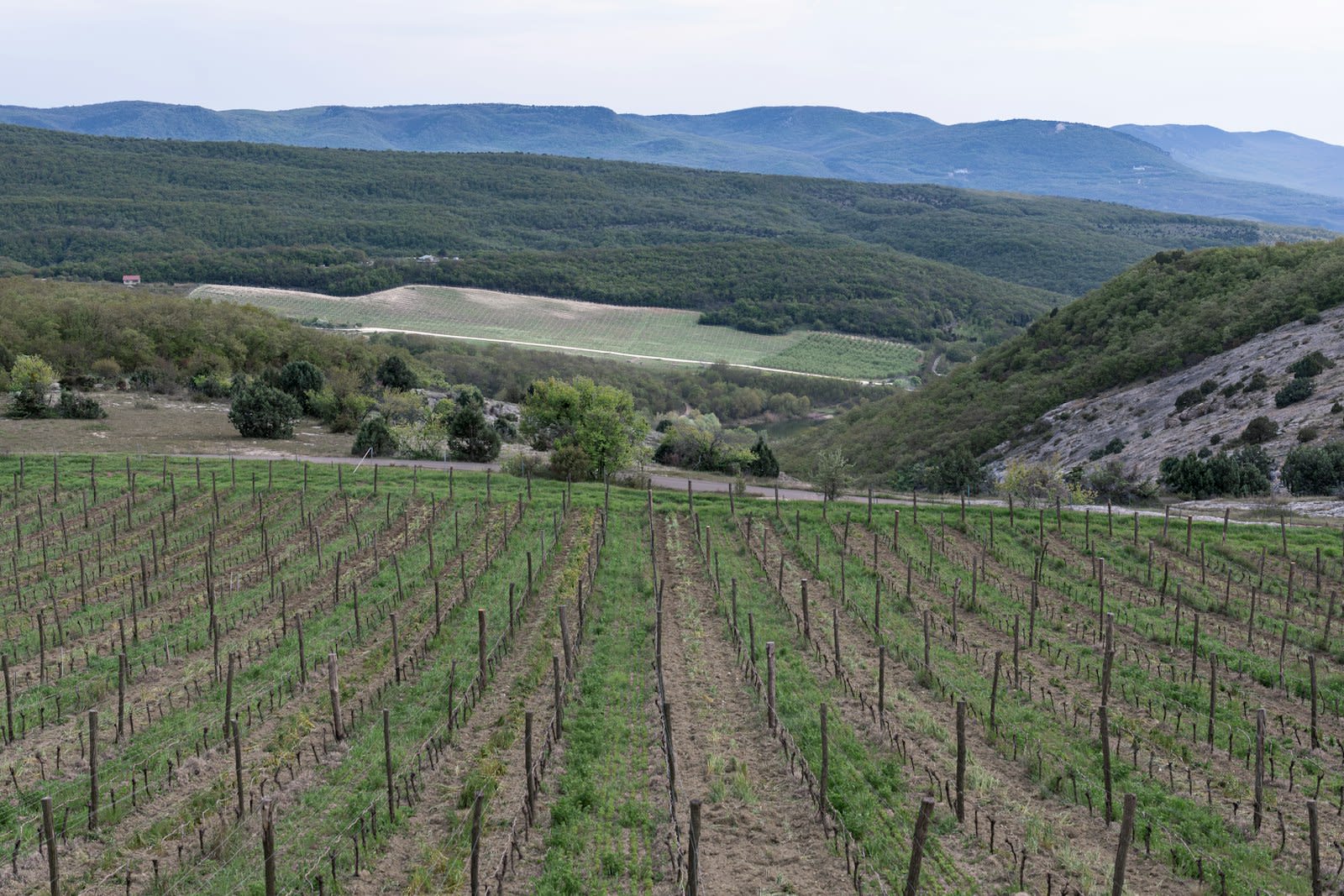
Armenia's modern producers are not just choosing where to plant. They are being pushed higher up the mountain by the climate. Vayots Dzor has warmed by roughly 1.3 to 1.4 degrees Celsius over the past century. Most vineyards in the province now sit between 1,100 and 1,600 metres.
Margaryan and a partner winery have planted an experimental plot at 2,080 metres. That is about six thousand eight hundred feet. They are watching how gene expression in native varieties shifts under those conditions.
The visible face of the practice is Trinity Canyon Vineyards in Aghavnadzor, at about 1,300 metres in the heart of the province. In 2016 Trinity Canyon became the first Armenian winery to hold an international organic certification. They have since let it lapse: monthly inspections, renewal paperwork, and the cost of both became too much. They continue the practice without the badge.
What that says about the certification regime small-economy producers have to negotiate with is probably as much a story as the wine.
The institutions you can't see
The other piece of the foundation is institutional.
Zaruhi Muradyan, executive director of the Vine and Wine Foundation of Armenia, has been building the connective tissue an industry needs to compound over generations. Training programmes. Professional standards. An export framework. She also founded the EVN Wine Academy, whose flagship enology and wine business programme is taught in English, in partnership with Geisenheim University in Germany.
"We must know how to extend the life of vineyards."
The line is about plant longevity. It applies to the industry around them just as well.
The pieces only look unrelated when read separately. The lab archives the genetics. The Foundation builds the academy. The academy trains the winemakers. The winemakers plant vineyards at altitudes their grandfathers would have considered absurd. Each piece is a precondition for the one after it.
What this is really about
The story behind Armenia's wine revival is the same story behind a great deal of durable impact work: the visible parts are not where the work is. The headlines belong to the high-altitude vineyards, the Areni cave, the medals at international wine fairs. The work itself is in the freezer at the molecular biology lab and the year-long course at EVN Wine Academy.
An industry that the twentieth century nearly extinguished is being put back together not because someone planted vines on a steep slope. It is being put back together because someone, twelve years ago, started sequencing varieties before they vanished from the country's gardens.
The diagnosis is closer to the one we wrote about in rural electrification than the surface stories suggest. There, the megawatts everyone celebrates are downstream of the off-take economics nobody films. Here, the medal-winning vintages everyone tastes are downstream of a genetic archive nobody photographs.
The work that gets the press is the climb. The work that matters is the archive.