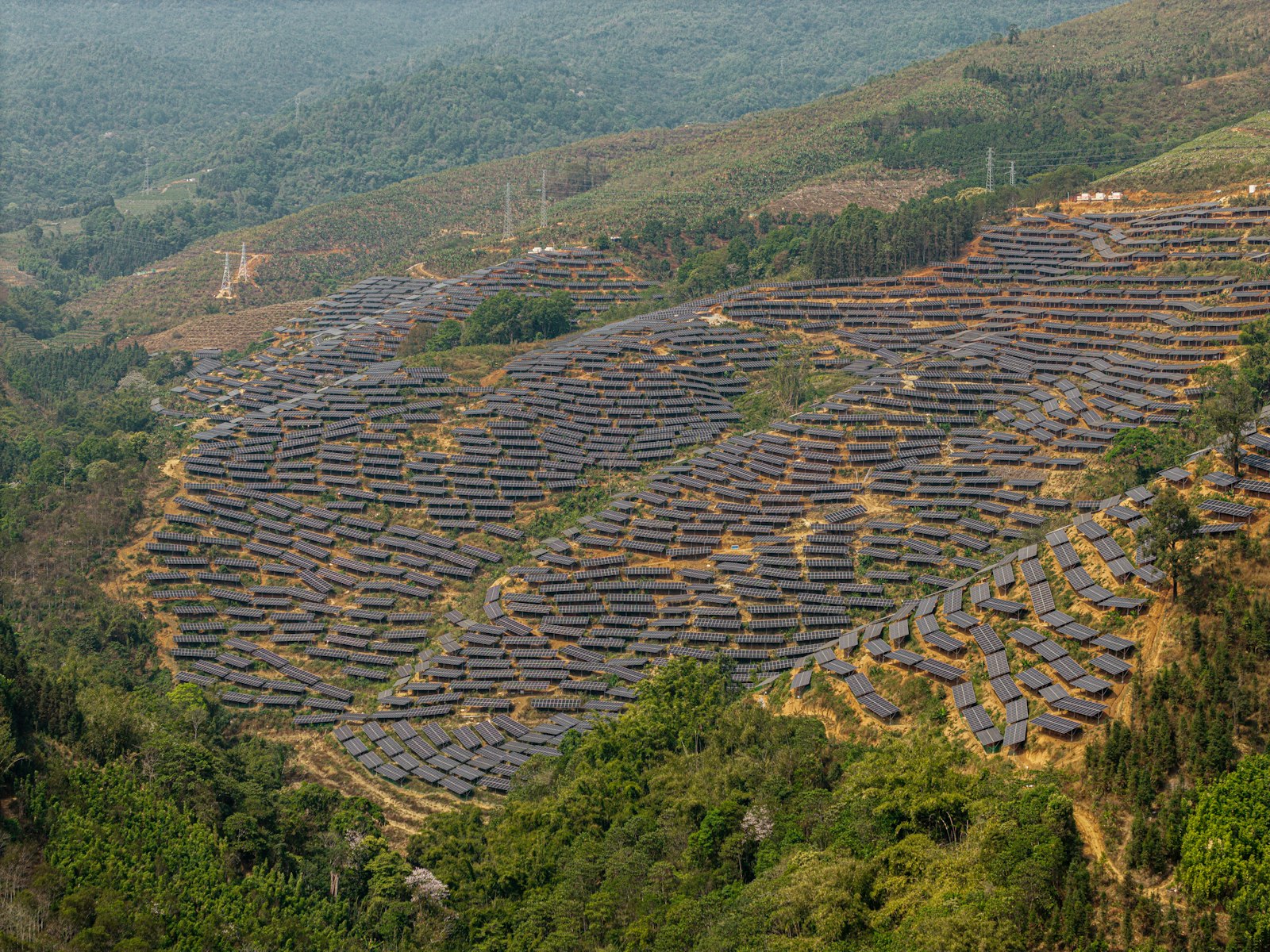
For more than a decade, the playbook for lifting rural communities out of energy poverty has read like a single line: bring the power, and the rest will follow. Donor decks, ministerial speeches, and venture pitches have all leaned on the same logic. Switch on the lights, and a small economy switches on with them. Workshops open. Cold storage works. Mills run. Children study after dark. Income compounds.
The lights are arriving. The economy isn't.
In Nigeria alone, the Rural Electrification Agency had commissioned 173 mini-grids serving more than 100,000 new connections by late 2024, with another 215 grant agreements signed for sites still in development. The infrastructure works. The economic layer it was supposed to unlock has not followed at the same pace, and we have probably been asking the wrong question all along.
Mini-grids work. The economics often don't.
Solar plus storage, smart metering, anchor-load business cases, performance-based subsidy programmes like Nigeria's Nigeria Electrification Project. As an engineering problem, rural electrification is largely solved.
What remains unsolved is what happens after the meter starts spinning. Across African mini-grid deployments, productive-use customers (rice millers, welders, cold-chain operators) consume more than three times what the average household does. In some operator portfolios they make up roughly a quarter of customers and generate close to half of revenue. Mini-grid economics don't sit on residential demand. They sit on whether a small productive cluster shows up at scale.
That cluster is what most projects cannot reliably produce. A productive-use load (a maize mill, a cassava grinder, a small cold-chain facility) is a piece of equipment, not a business. It needs raw inputs at predictable prices, a buyer for what it produces, and a logistics chain that can move output to wherever value is finally captured. When any of those break, the meter spins, but the community's wallet doesn't.
Power is the easy part.
The question isn't kilowatts. It's who's buying.

Nico Peterschmidt, CEO of INENSUS, has spent close to two decades inside the economics of rural electrification. His firm helped write Nigeria's mini-grid regulations for the Nigerian Electricity Regulatory Commission and supported Sierra Leone's $40 million Rural Renewable Energy Project, which electrified 94 villages. His framing is the one most policymakers still haven't absorbed:
"The main question is: Is there reliable off-take of pre-products from that community at volume and at a fair price? Where that is established, cash flows into the community and drives economic development."
The language matters. Pre-products: not raw harvest, not finished retail goods. The intermediate stage. Cassava that has been peeled, dried, and milled rather than dug up and bagged. Maize that has been graded and shelled. The point in the value chain where most of the value still sits upstream, but where electricity has just done real work.
If a serious buyer exists for that pre-product, the mini-grid stops being an isolated piece of infrastructure and starts being part of an income-generating system. If no buyer exists, it is a generator running into a void.
Why the off-taker role keeps going unfilled

The structural problem is who is supposed to play that buying role, and who currently does. As Peterschmidt puts it:
"Neither the mini-grid companies nor the industrial product processors are willing to take that off-taker role. This is where traders come into play, but they usually only buy raw products at the lowest price."
That sentence describes most of the leakage in rural value chains. Mini-grid operators are utilities; their incentives end at the meter. Industrial processors want scale, which most rural producers cannot guarantee. Into the vacuum step the traders, willing to buy but only at the low end: raw, unprocessed, at the lowest price the community will accept. Logistics compound the problem. Local processing operations are unforgiving, and every component has to work in concert. Most of the time, at least one isn't.
Where systems thinking actually starts
The fix isn't more megawatts. It's redesigning the incentives at the buyer end of the chain.
INENSUS itself has built one direct response: the KeyMaker Model, in which the mini-grid operator (or a partner) takes on a value-chain role, processing local agricultural output into pre-products and selling them upstream. Electricity stops being the only revenue. The operator becomes part utility, part aggregator, with skin in the productive economy it powers. Most operators would rather not adopt it; it is harder than selling kilowatt-hours. It is also the answer to what the kilowatt-hour business leaves on the table.
Two policy moves would push the rest of the sector in the same direction. The first is a shift in trader behaviour: governments and development financiers can structure incentives so that traders are paid better for moving processed goods than raw ones, flipping the economics of the lowest-margin extraction model. The second is transparency on price. A digital platform publishing fair market prices for rural pre-products would strip out the information asymmetry traders rely on.
Nigeria's NEP has begun moving in adjacent directions, with a performance-based grant programme aimed at putting productive-use appliances into 20,000 rural micro-businesses. It's the right instinct, and it stops short. Equipment without an off-taker is still a stranded asset.
The infrastructure trap
The error in rural development hasn't been investing in infrastructure. It has been treating infrastructure as the answer when it is only the enabler. Roads, electricity, connectivity: these are inputs into a system. They are not the system.
For deeper sector context, the African Development Bank's Green Mini-Grid Fundamentals is a useful primer, and our piece on the leaders building solutions that are changing lives profiles others working at the same systemic edge.
A community with reliable power and no reliable buyer is still a community waiting.
